
About the Michigan Arts Festival


In the News
Inaugural Michigan Arts Festival brings 55 events to Ann Arbor, Ypsi, Dearborn, Detroit, and Flint
Concentrate • 9/22/25
U-M Launches Fall Michigan Arts Festival
Broadway World • 9/3/25
Momentum builds for inaugural Michigan Arts Festival
The University Record • 8/25/25
What is the Michigan Arts Festival?
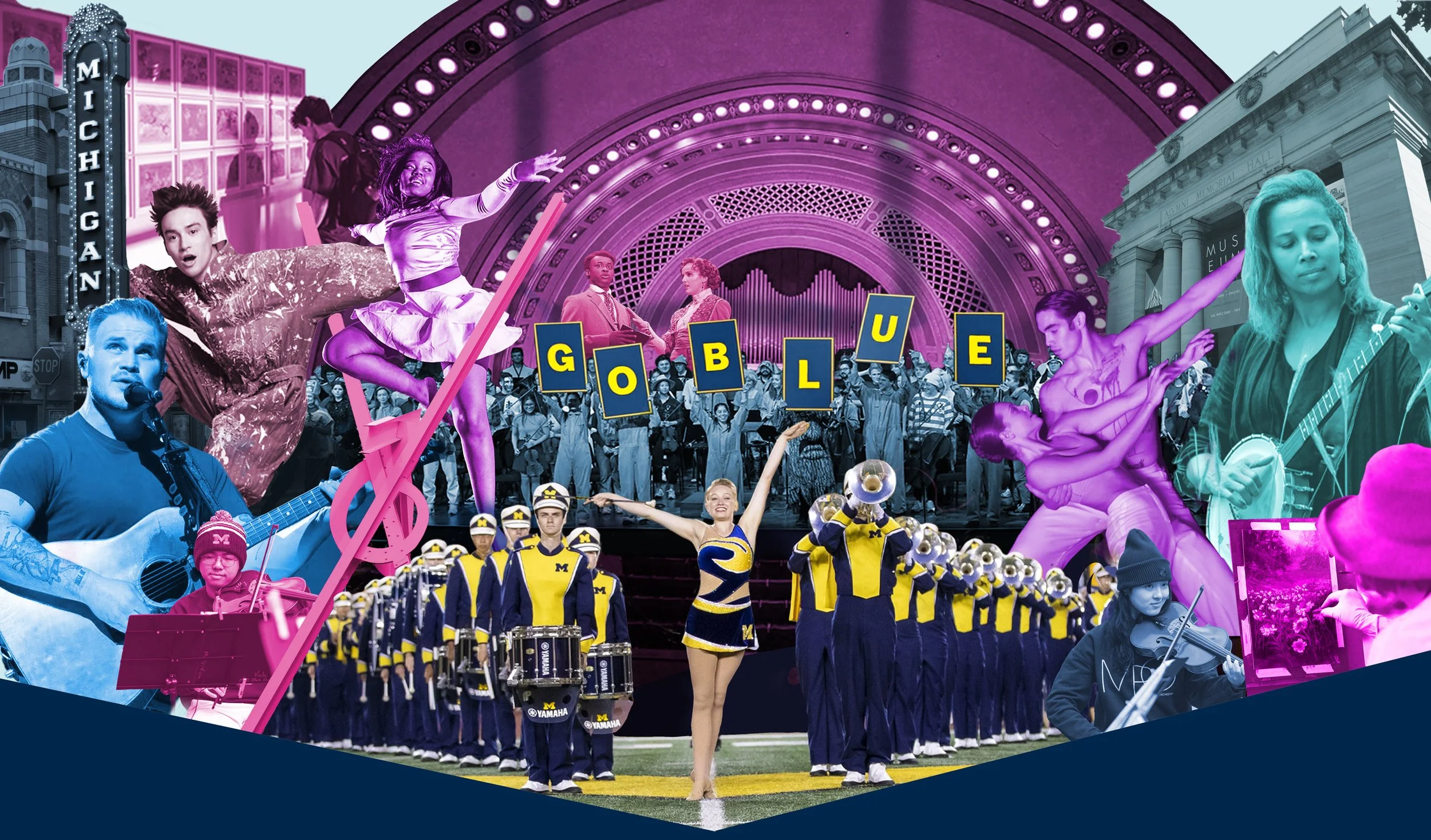
The Michigan Arts Festival is both a celebration of the arts across U-M’s campuses and a month-long campaign to increase exposure, attendance, and participation in the arts. This festival will highlight arts experiences at all of U-M’s campuses and includes performances, exhibitions, workshops, and community events, with a goal of connecting U-M students, staff, faculty, and community members to Michigan Arts year-round.
When and where does it take place?
The festival will run from September 25 to October 26, 2025, across U-M’s Ann Arbor, Dearborn Detroit, and Flint campuses and at select community venues. Signature events will take place at the Michigan Theater, Hill Auditorium, Taubman College, UMMA, Stamps Gallery, North Campus Diag, and more.
Who is it for?
The festival is open to all—U-M students, faculty, staff, alumni, and the public.
What does it cost?
While some events are ticketed, many if not most events are accessible free of charge.
Is there funding available for my event?
No, the 2025 Michigan Arts Festival spotlights existing events, it does not offer funding.
How can I get my arts event listed?
By posting to the Happening@Michigan calendar. Learn more on our Get Involved page.
Where can I get a festival t-shirt?
T-shirts will be given out September 27 during the Student Arts Org Fair on the Diag.
What is the U-M Arts Initiative?
U-M’s Arts Initiative is a university-wide effort to amplify the value of the arts and creativity in research, learning, and public life. Through funding, convening, and cross-campus partnerships, the Initiative supports bold, interdisciplinary work that positions the Michigan Arts ecosystem as essential to learning and discovery.
Why a festival?
The Michigan Arts Festival spotlights the vibrant university arts scene, serving as a broad invitation for students, faculty, staff, and the public to engage with the arts at Michigan—our museums, theaters, and concert halls (usually for free)—to celebrate and expand the role of the arts in research, learning, and community life.