'The postcard craze' of historic Michigan: More than 60K postcards digitized at U-M Clements Library
Fourth of July celebrations captured in Royal Oak, Fenton, Lawton, more, from over a century ago
ANN ARBOR—The William L. Clements Library at the University of Michigan has recently made available a digital database of real photo postcards from the David V. Tinder Collection of Michigan Photography.
The 66,470 postcards feature locations from every corner of Michigan from the 1840s and into the mid-20th century.
Thanks to more than 4,000 volunteers who participated in a crowdsourced project on Zooniverse, the digitization of the postcards makes the collection more accessible for research. While the physical postcards are organized in 150 boxes alphabetically by county and city, the digital collection can be sorted by county, subject, genre, place and date to narrow down the collection as they see fit, complete with the full transcription of any written notes on the card.
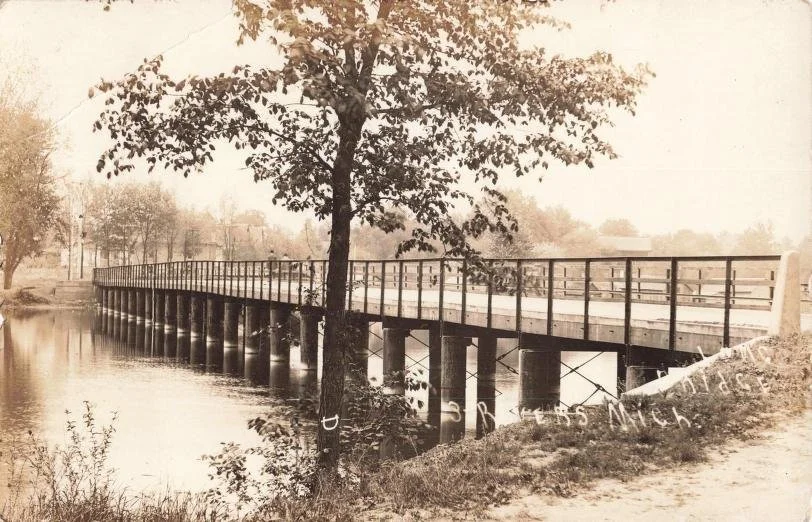
This collection represents a fundamental shift in communication of that era as postcards first exploded onto the scene in what would become known as "the postcard craze." For the first time, there was an affordable and easy way to send messages, connect and stay updated in a nation undergoing rapid change.
"In the early 1900s, new and more accessible technology led to an explosion of photography," said Claire Danna, a former Joyce Bonk Assistant at Clements. "Coupled with the growth of communication networks as a result of rural free delivery, postcards become a form of social media that feel(s) oddly familiar even a century later."
These images capture an American society straddling rural, agrarian, pre-industrial life and an increase in mechanization, urbanization and electrification. The parades, industrialization and invention, military content in the midst of World War I, early Boy Scouts groups, the growing popularity of baseball, football and other sports, and aspects of tourism, entertainment and advertising all help to cultivate a new image of America, one that evolves in conjunction with this wave of postcard popularity.
The most common themes represented in the postcard images are streets, city and town life, stores and shops, bodies of water, and houses, reflecting the everyday nature of the collection and Michigan's status as the Great Lakes state.
Tinder's fascination with photography began in 1964 after he read William Darrah's "Stereo Views: A History of Stereographs in America and Their Collection." He started collecting stereoviews because he enjoyed how they immersed the viewer in the scene, and eventually traded this geographically expansive collection to focus on one place: his home state of Michigan. He took a deep interest in the history of photography, and later developed his "Directory of Early Michigan Photographers," edited by Clayton Lewis, the Clements Library's former curator of graphics material.
Eventually, Tinder's collection included nearly every type of photograph from the 19th and 20th centuries, including daguerreotypes, cartes de visite, cabinet photographs, stereographs and, of course, real-photo postcards.
"This crowdsourcing project was a true team effort, involving collaboration among the Clements Library, Shapiro Design Lab and U-M Library Digital Content & Collections," said Emiko Hastings, curator of books and digital projects librarian. "Over 4,000 volunteers classified and transcribed the postcards in Zooniverse, contributing an enormous amount of their time to this project. I am immensely grateful to everyone who participated and supported this project along the way."