

The Arts Research: Incubation & Acceleration program has awarded grants to six faculty-led projects focused on topics ranging from the experiences of disabled communities to representations of plants and ecosystems in Great Lakes Indigenous artwork.
“These projects demonstrate the incredible capacity of creative practice and the valuable role of arts research at U-M,” said Geoffrey Thün, associate vice president for research – social sciences, humanities and the arts. “We anticipate that remarkable outcomes and robust connections between our faculty and the external partners involved will be developed through this work.”
Since its launch in 2023, the ARIA program has awarded more than $1 million in grants to develop arts research and creative practice. Faculty from 11 schools and colleges across the University of Michigan’s Ann Arbor, Dearborn and Flint campuses have led projects that are centered in the arts and invite new forms of collaboration.
“Arts and creative practice research broadens our creative tool set for understanding the world and our role within it as it increases our shared respect for the many ways in which research can be done,” said Mark Clague, executive director of U-M’s Arts Initiative. “The arts are a crucial part of U-M’s research mission, challenging all of us to think boldly, take risks, challenge and reinterpret tradition, and to engage and serve our communities by exploring meaningful solutions.”
Applications for the next round of ARIA grants are due March 11. Clare Croft, director of arts research and creative practice, will host a Zoom information session about ARIA from 9:30–10:30 a.m. February 10.
“These efforts are essential in our collective efforts to fulfill our research and creative practice goals,” Croft said. “These grants support projects that offer new perspectives, provide creative pathways for addressing social issues and engage communities across Michigan and beyond.”
This round of ARIA awards also includes the first ARIA+ award — a new aspect of the ARIA program that pairs faculty research efforts in the arts with campus initiatives and infrastructures. The inaugural award is in partnership with the U-M Biological Station, which will host “Wahkohtowin: Reconnecting With Place Through Indigenous Art Practices” for an artist residency in 2026.
“We are excited to welcome this innovative and creative research into a community of scholars who learn from the natural world,” said Aimée Classen, director of the U-M Biological Station. “Together, this work will deepen our collective understanding of ecological systems and how they shape — and are shaped by — human activity.”
The selected ARIA projects are:
Flames of War
Principal investigator: Jim Cogswell, Arthur F. Thurnau Professor; and professor of art, Penny W. Stamps School of Art & Design
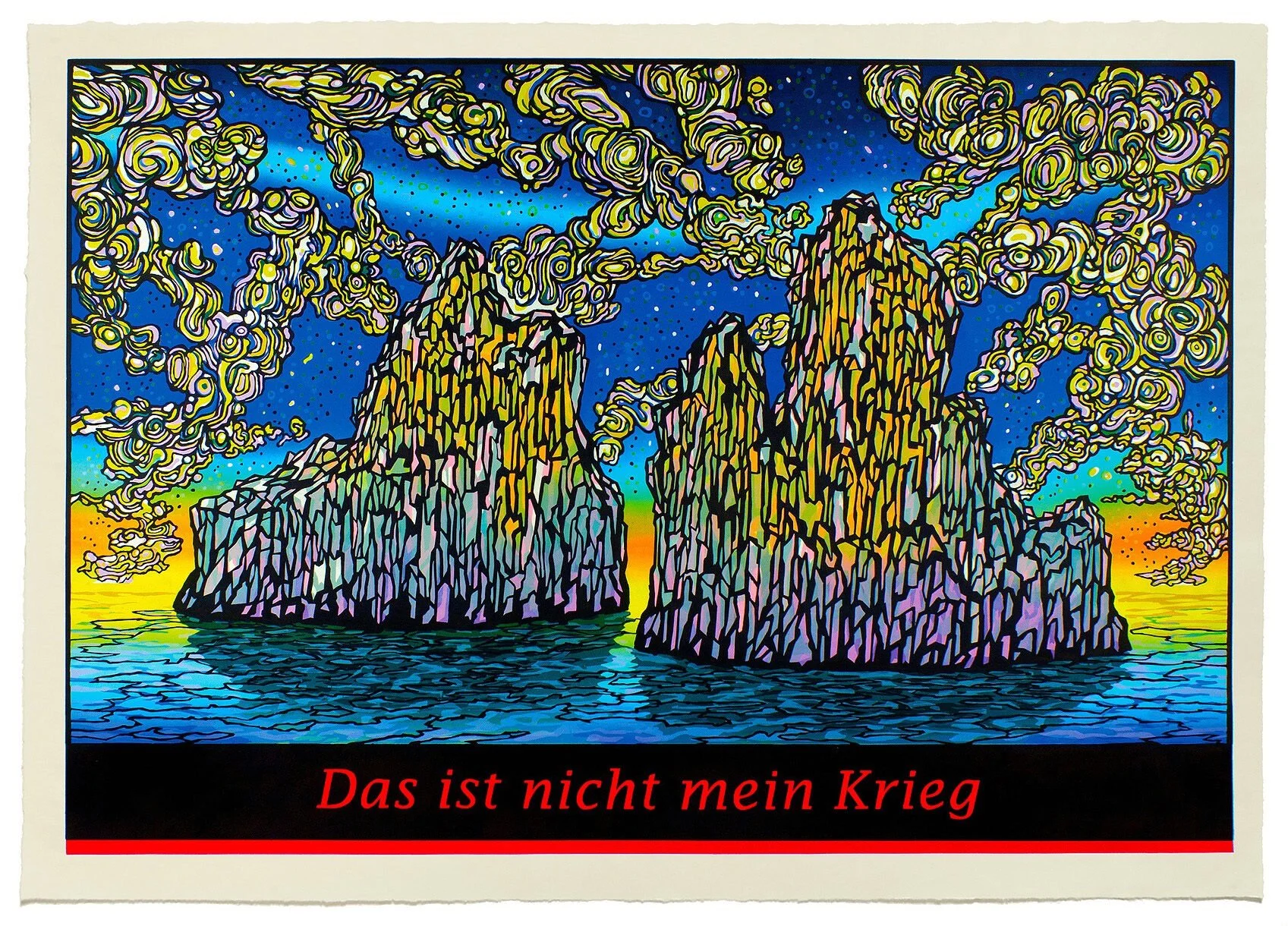
Goal: In fall 2027, this project will visually interpret three tragedies by Euripides (“Trojan Women,” “Electra” and “Iphigenia in Aulis”) in a large-scale exhibition of vinyl paintings displayed across entire buildings in two sites in Japan. The team will work closely with Japanese scholars and peace activists to understand the relevance these stories have for contemporary Japanese audiences.
Crip/Mad Archive Dances
Principal investigator: Petra Kuppers, Anita Gonzalez Collegiate Professor of Performance Studies and Disability Culture, professor of English language and literature, and of women’s and gender studies, LSA; professor of art, Stamps School; and professor of theatre and drama, and of dance, School of Music, Theatre & Dance
Goal: Kuppers will use multidisciplinary methods from dance, creative writing, history and disability studies to create poetry and reflections on the unstable archival presence of “mad people” in dance history. The project will produce publications and a symposium.
Field: Intersecting Narratives of Climate, Migration, and Belonging in the Arctic
Principal investigator: Endi Poskovic, professor of art and design, Stamps School
Goal: Through large-scale woodcut prints and print installations, this project will explore how the environmental transformation of the Arctic is shaped by both land and community and invite viewers to reimagine their relationship with the living world. Poskovic will work in Norway’s Svalbard archipelago and collaborate with students at the Oslo National Academy of the Arts to experiment with sustainable printmaking methods, translating Arctic research into collective acts of making.
“While I was Sleeping from Prussian Blue and Tyrol Blue to Yellow Orange with Deep Red” by Endi Poskovic. (Courtesy of the Arts Initiative)
In Search of Lost Stims (ISOLS)
Principal investigator: Alexis Riley, assistant professor of theatre and drama, SMTD
Goal: This project aims to uplift multiple perspectives and highlight the experiences of disabled communities by producing an audiovisual installation that incorporates movement associated with stimming (repetitive performance of certain physical movements or vocalizations) and historical photographs of disabled people dancing. Grounded in archival research and created alongside disabled artists and community members, the completed project will be exhibited at the Center for Mad Culture gallery in Chicago in February 2027.
Give Us A Call: The Chris Gethard Show Story
Principal investigator: Angela Washko, Catherine B. Heller Collegiate Professor of Art, Stamps School; and professor in digital studies institute, LSA
Goal: This feature-length documentary film explores the New York City experimental, improvisational comedy, music and DIY performance communities of the early 2000s. This work looks at the legacy of public access television and how artists have used this platform to make experimental television that otherwise would have gone unseen and unsupported.
Wahkohtowin: Reconnecting With Place Through Indigenous Art Practices
Principal investigator: Selena Smith, associate professor of earth and environmental sciences, associate research scientist, Museum of Paleontology, LSA; and associate professor of Program in the Environment, School for Environment and Sustainability
Goal: This project will explore how plants and ecosystems are represented in the artwork of the Métis and Anishinaabeg, two Indigenous groups often associated with the Great Lakes region, and host talks and workshops by renowned Indigenous artists and scholars. It will also form the Maamawimazinitoojig (“the ones who make images/representations together”) collective to create new artworks on the themes of place, relationships with plant relatives and interconnectedness, culminating in public exhibits.