Inside the Worlds STAMPS Seniors Built
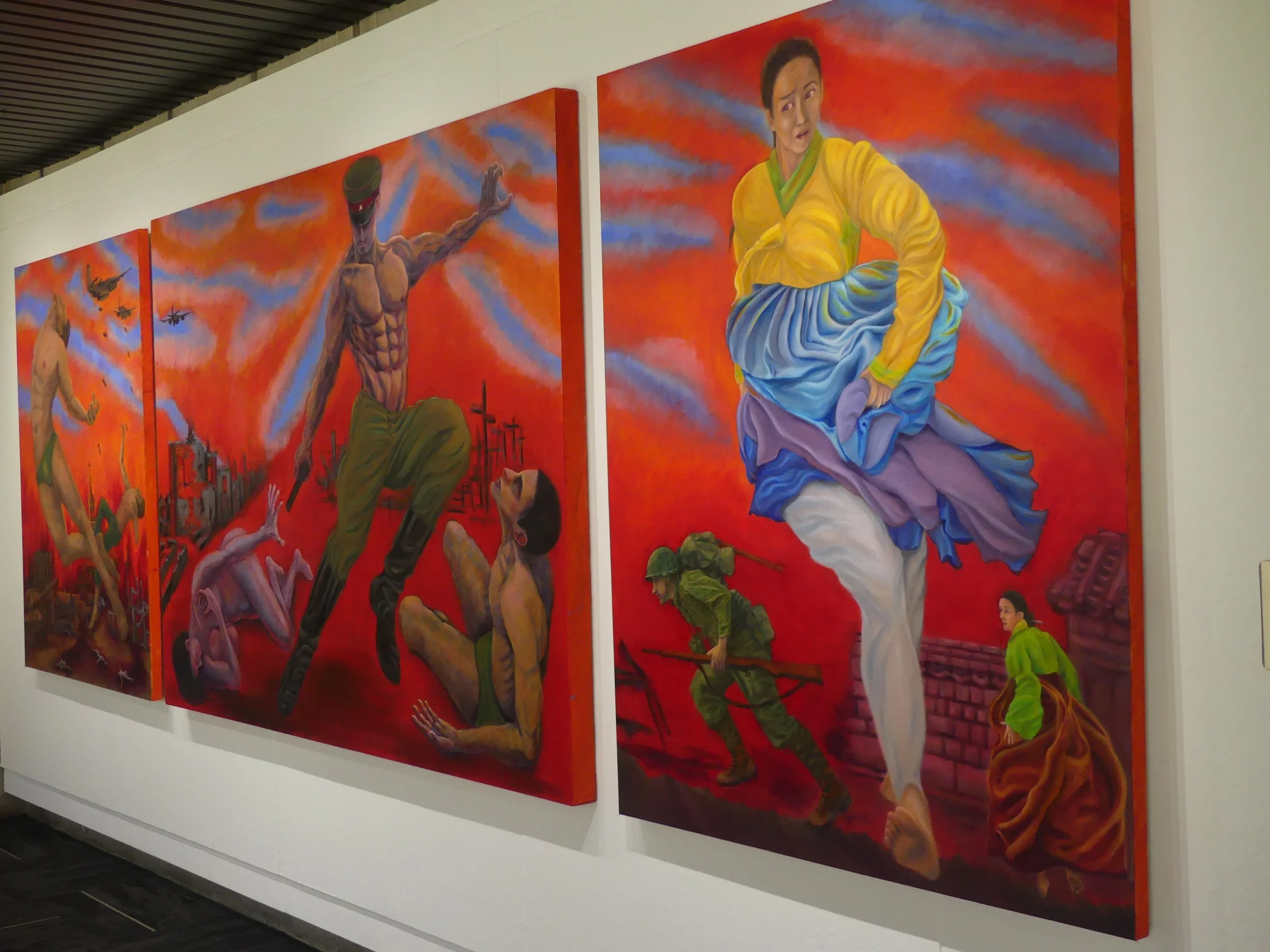
David Byun’s 1950 Korean War, Seoul confronts the human cost of conflict through vivid, large-scale oil paintings that connect the history of the Korean War to the ongoing realities of war and displacement today. Supported in part by an Arts Initiative Student Mini-Grant.
Every spring, the halls of the Art and Architecture Building transform into an exhibition space showcasing the work of all Stamps seniors enrolled in the year-long Integrative Project (IP) thesis. The exhibition offers portals into entirely different worlds, with 4D works featured in a group screening and reel, and selected projects on display in the A&A Street Gallery.
This year’s exhibition, on view from April 20 through May 2, featured 76 student projects spread throughout the building, with many students converting their individual studio spaces into immersive installations and temporary galleries.
Walking through the exhibition meant moving constantly between disciplines, materials, and perspectives. One room held comics and printed ephemera. Another featured handmade garments. Down the hall, visitors encountered video games, sculpture, painting, sound, and multimedia installations. Many students invited viewers further into their work by offering stickers, cards, zines, or other takeaways alongside the installations.
The result was less a traditional exhibition than an ecosystem of ideas — deeply personal, experimental, and often ambitious in scale.
For many students, bringing those ideas to life required more than creative vision alone. A number of projects in this year’s exhibition received support through the Arts Initiative’s Student Mini-Grants program, which helps students fund materials, fabrication, printing, and production costs for artistic projects across campus.
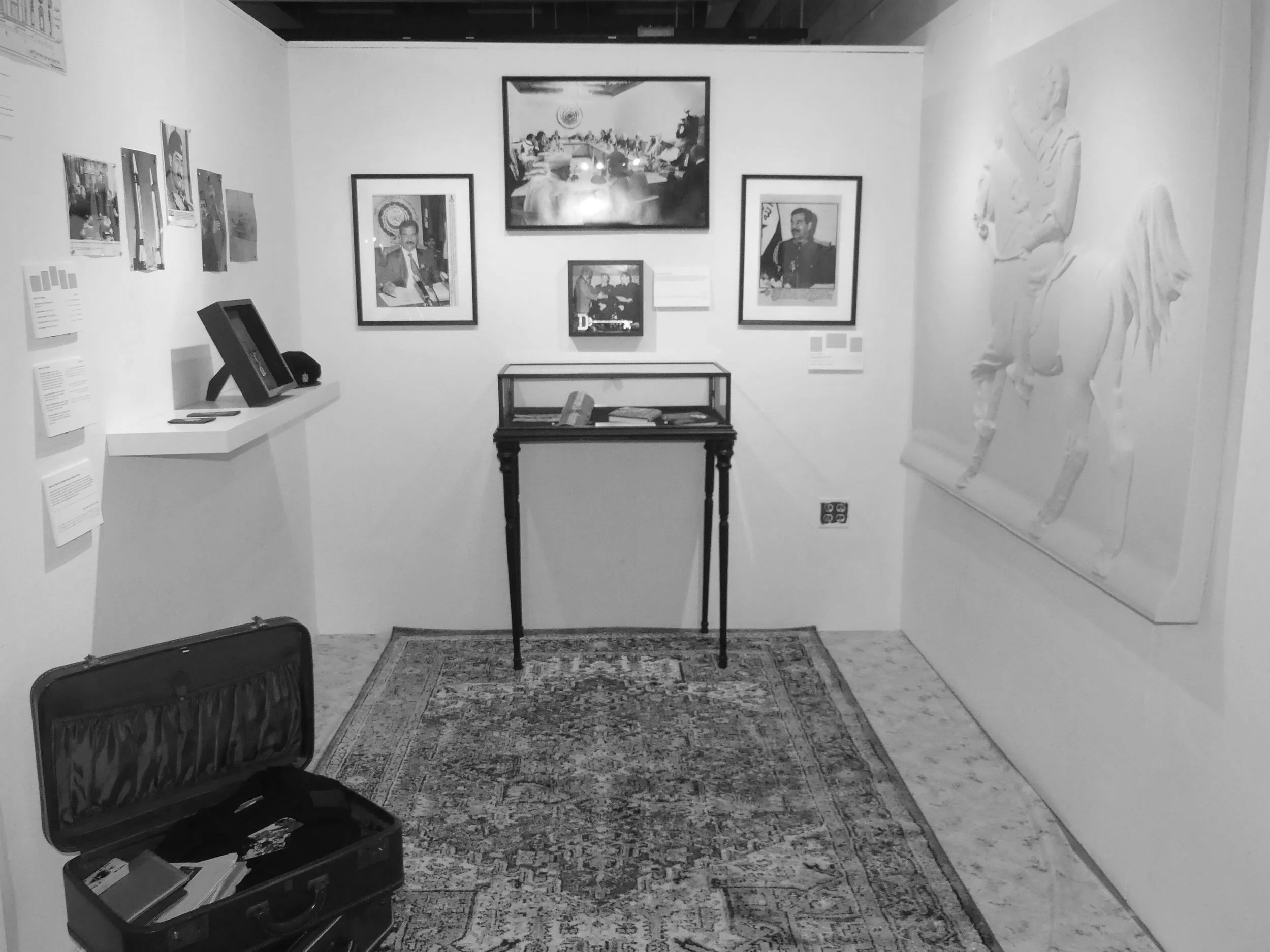
Tomaz Konja’s Who Decides Evil? transforms a gallery space into a fictional museum archive, blending photography, sculpture, and found materials to examine power, propaganda, and the legacy of the Iraq War at the 2026 Stamps Integrative Project Exhibition.
Among the funded works were Tomaz Konja’s Archival Absences and David Byun’s 1950 Korean War in Seoul.
Konja’s installation combined sculpture and reproduced archival documents inspired by research into records lost through conflict, including Iraqi print archives and heavily redacted FBI files. The work asked viewers to consider how destruction, omission, and state control shape historical memory — and what becomes unknowable in the aftermath of war.
Byun’s large-scale figurative oil paintings explored the lasting human impact of war on families and nations. While rooted in the history of the Korean War, the paintings also pointed toward present-day global conflicts, encouraging viewers to reflect on the decisions that lead to violence and the people forced to live with its consequences.
Though the Student Mini-Grants program often funds practical needs — ink, printing, fabrication — its impact can be seen throughout exhibitions like this one. The support allows students to experiment at larger scales, take creative risks, and fully realize ideas that might otherwise remain sketches or proposals.
In the Integrative Project Exhibition, art appeared everywhere: in hidden corners of studios, across painted walls, through projected screens, and inside conversations between artists and visitors. For those willing to wander, the building offered proof that creative work at Michigan is not confined to any one medium or discipline — it’s alive in the spaces students build for themselves and for each other.